Neither Here Nor There: Why Young India Feels Lost
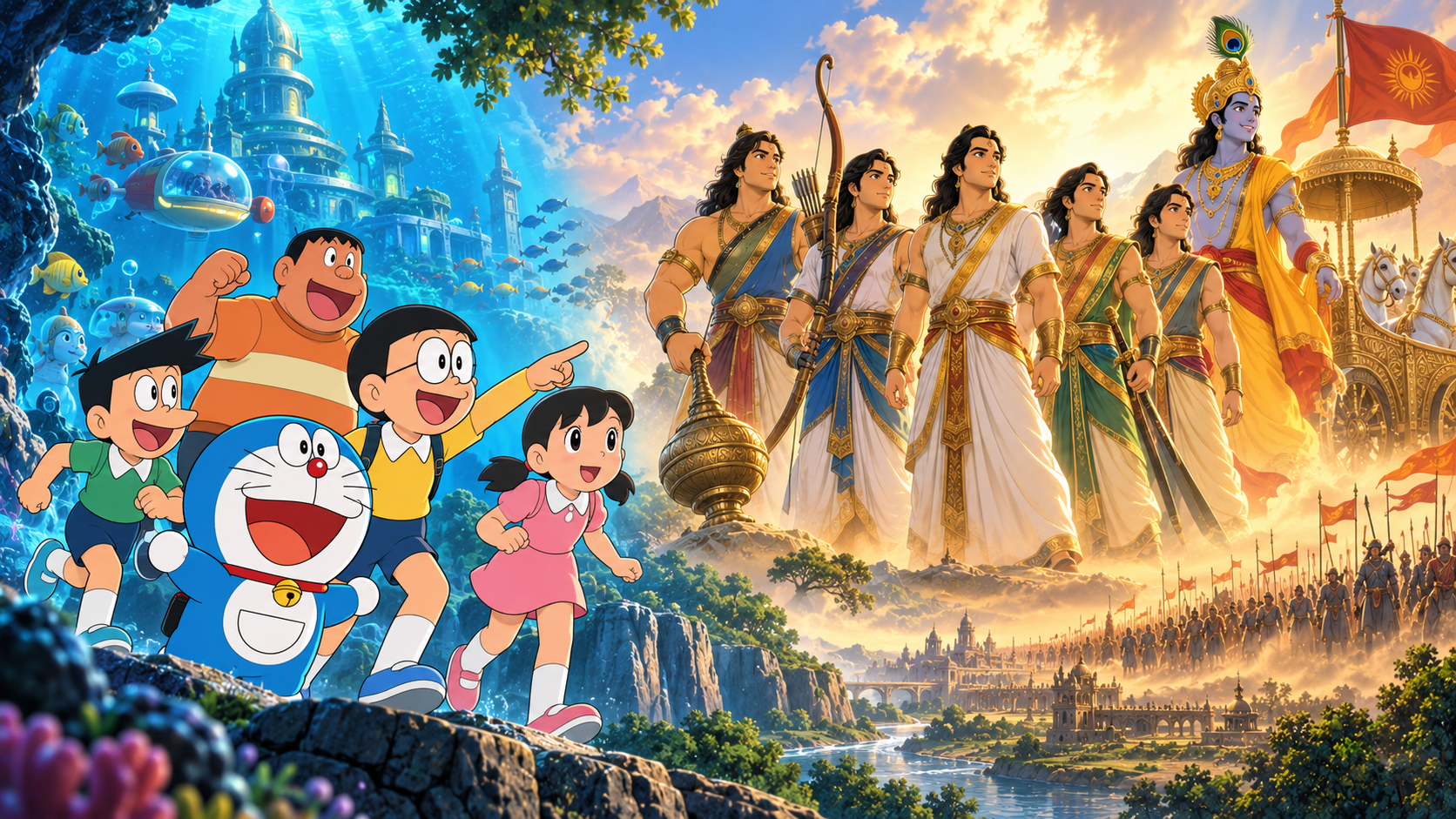
Many young Indians today feel caught between two worlds. They grew up with Western ideas of success but don't fully belong to the West. Now, as interest in Indian history and traditional values grows, many feel disconnected from their own roots, too.
This isn't a personal failure. It reflects how we educated them, what we promised them, and what we stopped valuing along the way.
The system we inherited
In 1835, Macaulay's education policy aimed to create a class "Indian in blood and colour, but English in taste". The British left in 1947, but much of that thinking remained. We still treat English as a measure of intelligence, desk jobs as symbols of success, and marks as a measure of a child's ability.
But we can't blame the British alone. We had alternatives. Gandhi's Nai Talim, proposed in 1937, placed practical crafts at the centre of learning. Tagore developed Santiniketan around creativity and nature-based education. Yet these approaches never became mainstream. A young nation needed to educate millions quickly, and conventional classrooms became the model it adopted.
What we lost
Traditional Indian education went beyond textbooks. Early childhood was unhurried. Children learned stories from grandparents, manners from mothers, and discipline from fathers. Traditional games developed their minds and bodies. The gurukula system viewed physical, mental, and intellectual growth as parts of a complete education.
This isn't just nostalgia. Finland begins formal academic learning at seven, with early education focused on purposeful play. But this requires public investment. Parents pay an estimated 14% of municipal early education costs. It is a national commitment, not simply a return to tradition.
In India, holistic education has often become a premium offering. Many parents want well-rounded learning but cannot afford it. Government data shows household spending per student in non-government schools is nearly nine times that in government schools. Almost one in three schoolchildren depend on private coaching, while only 1.2% of students identify government scholarships as their primary funding source. Families bear most of these costs themselves.
The broken promise
For middle-class and lower-middle-class families, the promise was simple: study hard, secure a job, and build a comfortable life. Parents who focused on marks weren't foolish. They wanted financial security for their children.
But that promise is becoming uncertain:
Jobs:
Nearly 40% of graduates under the age of 25 who were part of the labour force were unemployed in 2023, according to reports on the State of Working India 2026 study. The rate was already around 35% in 1983, showing that graduate unemployment is a long-standing problem.
AI:
The World Bank estimates that generative AI is automating only 4.5% of jobs in low- and middle-income countries. Naukri reported that fresher hiring increased by 17% year-on-year in February 2026. However, an Indian think tank's study found that more than half of the respondents expected companies to slow down entry-level hiring.
Mental Health:
A survey of 8,542 students identified career uncertainty as the second-largest source of stress. Nearly half of the students had never received structured career counselling.
Education and Career Readiness:
We give children 12 to 15 years of textbook-based education, then send them into a world that no longer guarantees the opportunities they expected. Many lack practical skills, confidence, and the freedom to explore alternative careers.
We give children 12 to 15 years of textbook-based education, then send them into a world that no longer guarantees the opportunities they expected. Many lack practical skills, confidence, and the freedom to explore alternative careers.
To me, that is the real problem.
Where the real gap lies
India doesn't lack promising education policies. The National Education Policy (NEP) 2020 recommends a 10-day bagless period for students in Grades 6 to 8, allowing them to learn from carpenters, gardeners, potters, and artists.
But the guidelines arrived only in July 2024. Ten days of practical learning cannot undo twelve years of being taught that marks determine success.
Vocational skills should become meaningful school subjects, taught and assessed with the same respect as academics. These opportunities must exist in government schools, not just expensive private institutions.
However, critics of NEP raise a valid concern: economically disadvantaged children could be directed towards vocational education at the expense of mainstream academics.
Learning a craft must remain a choice, not a lesser path determined by family income. No child should have to give up mathematics to learn pottery.
What we can do now
Governments often move slowly, and meaningful reforms usually follow changes in society. That's why I believe educational change must begin at home.
·Look beyond marks. Report cards measure only certain abilities. Recognize your child's other talents and interests.
·Respect different career choices. "My daughter wants to study arts." "My son wants to become a potter." When parents speak proudly about these choices, others begin to respect them too.
·Create demand. When more families ask for diverse learning opportunities, schools have stronger reasons to provide them. Governments may eventually follow.
·Reconnect with elders. Stories from grandparents cost nothing but can help children understand Indian culture, traditions, and their roots.
·Teach financial skills. Passion alone doesn't guarantee income. A potter who understands pricing, marketing, and selling has a better chance of building a sustainable livelihood. Children need practical skills alongside their interests.
Our children deserve encouragement supported by realistic opportunities.
Where I stand in this
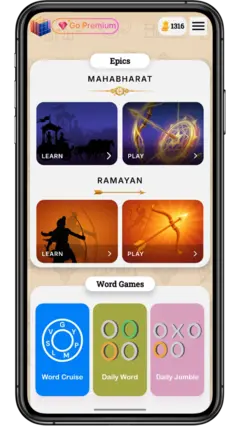
I should acknowledge my own connection to this conversation. I work on Lipi Epics, an app that brings the Mahabharata and Ramayana to younger generations through stories and games.
It grew from the same question this article explores: how can a generation disconnected from traditional stories reconnect with its cultural roots?
I don't believe an app can replace listening to stories from grandparents. Nor can one product solve our larger educational and cultural challenges.
But for many young people, the traditional storyteller at home is no longer there, while the smartphone is always nearby. If that's where young people spend their time, our stories should be accessible there too.
Lipi Epics is one small effort in that direction. The greater responsibility still belongs to families, schools, and society.
The long view
These changes won't happen in a single generation. We may not witness their full impact. But when enough people begin thinking differently, institutions eventually respond. That's how lasting change begins.
India has always been rich in diversity, including traditional skills, crafts, and occupations. We failed to preserve much of that diversity once, but we still have an opportunity to revive it.
Let our children grow up knowing where they come from. Let them develop the skills and confidence to earn a living doing what they love, rather than choosing careers out of fear that no other option exists.
After all, isn't that what education was supposed to achieve?