Why Young Indians Feel Disconnected From Their Cultural Roots
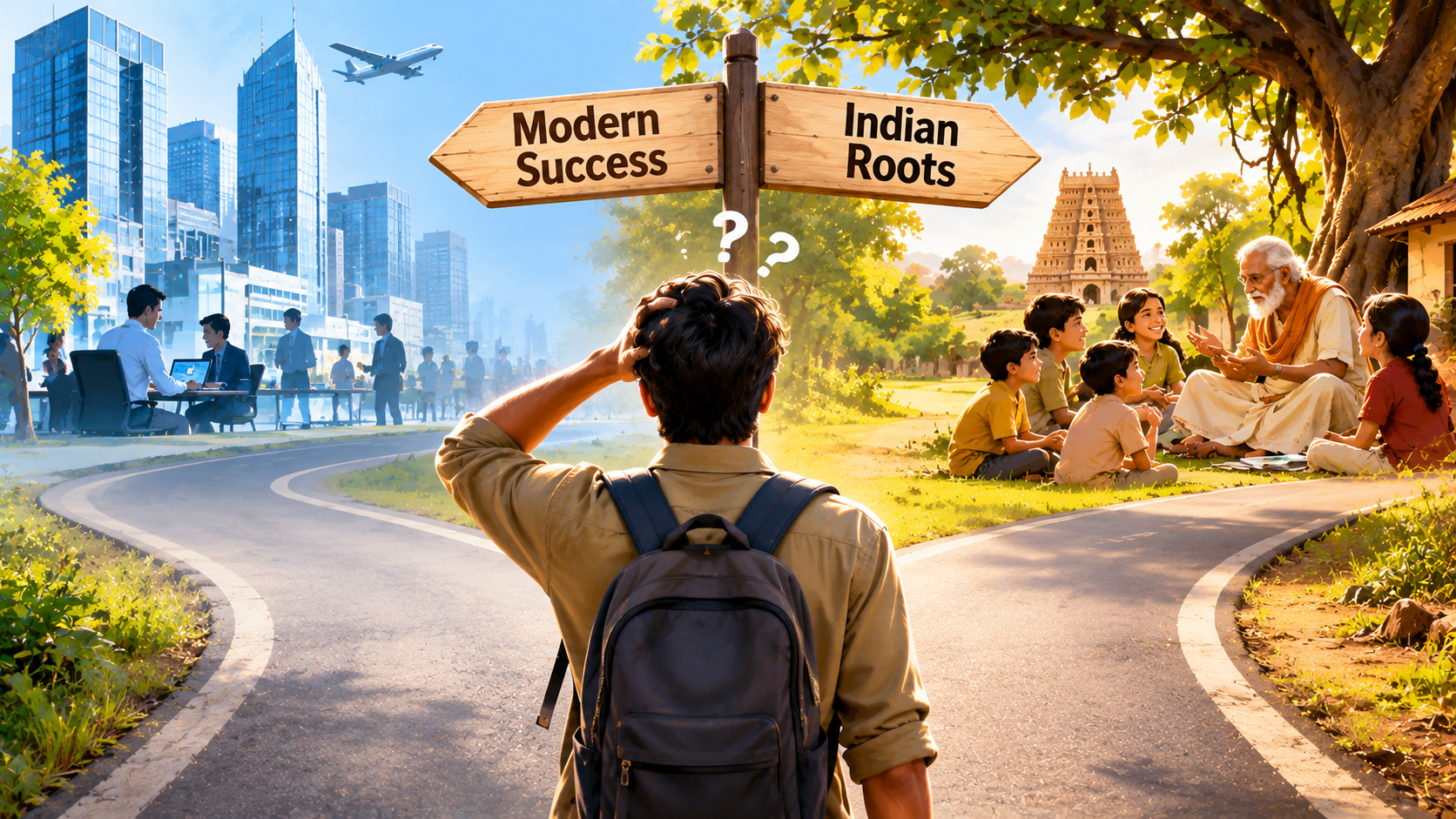
Why do some young Indians feel disconnected from their cultural roots? Changing family lifestyles, education focused heavily on academic achievement, career expectations, and fewer opportunities to experience traditional storytelling can all contribute. Yet cultural disconnection is not inevitable. Families, schools, and digital learning platforms can help young people explore Indian heritage while embracing modern education and careers.
India's younger generation is growing up with opportunities that previous generations could hardly imagine. Global education, technology, international careers, and digital communities have opened new possibilities.
But alongside these opportunities, an important question remains: Are young Indians getting enough opportunities to understand their own cultural identity?
The answer is not the same for everyone. Many young Indians actively celebrate festivals, speak regional languages, explore Indian philosophy, and learn about their heritage. Others may feel less connected because cultural learning has become less visible in their everyday lives.
Understanding this difference is essential.
What Does Cultural Disconnection Mean for Indian Youth?
Cultural disconnection refers to a reduced sense of familiarity, participation, or belonging in the traditions, languages, stories, and practices associated with one's cultural background.
For young Indians, it may appear in different ways:
- Having limited knowledge of regional traditions and family histories.
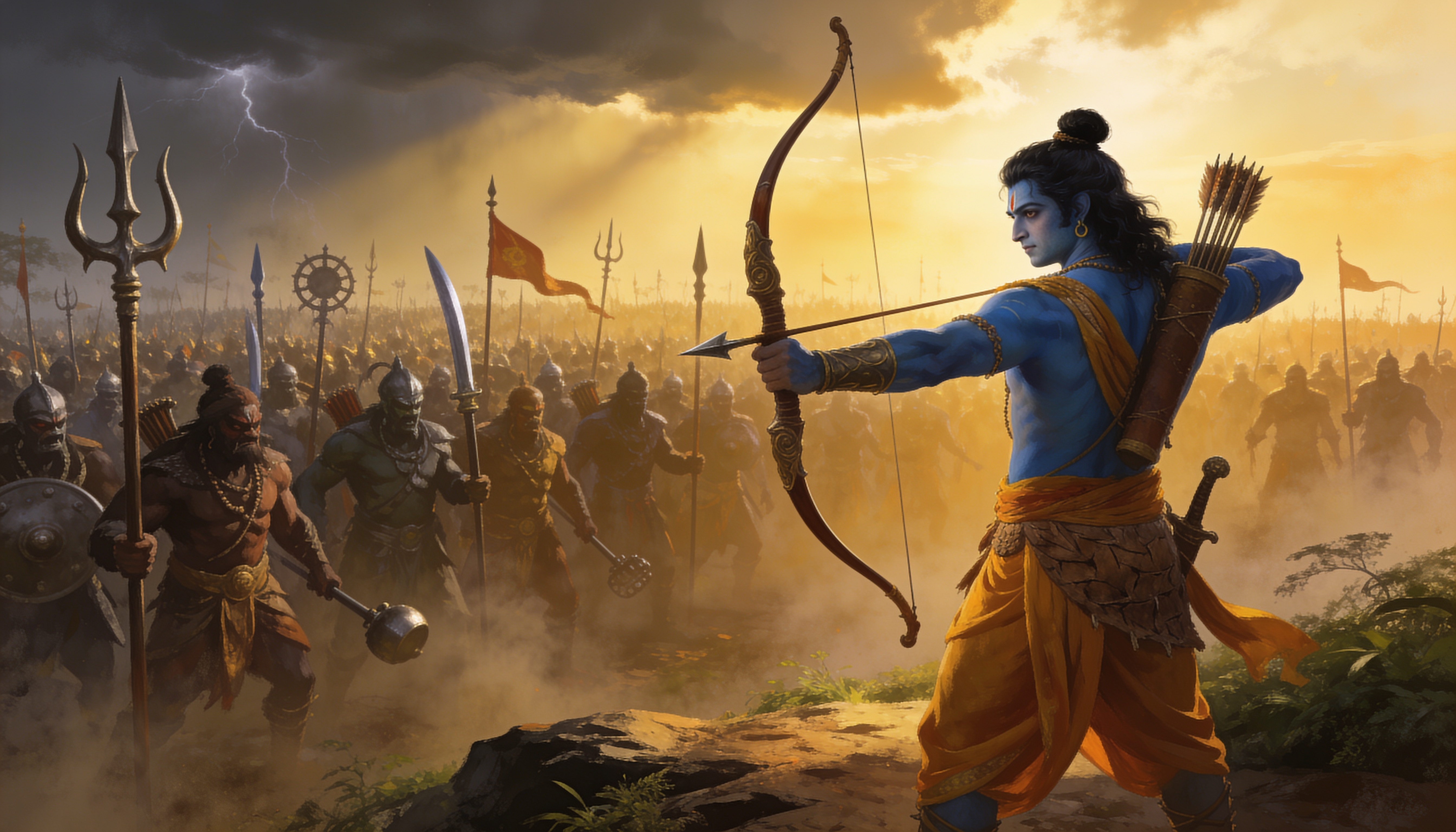
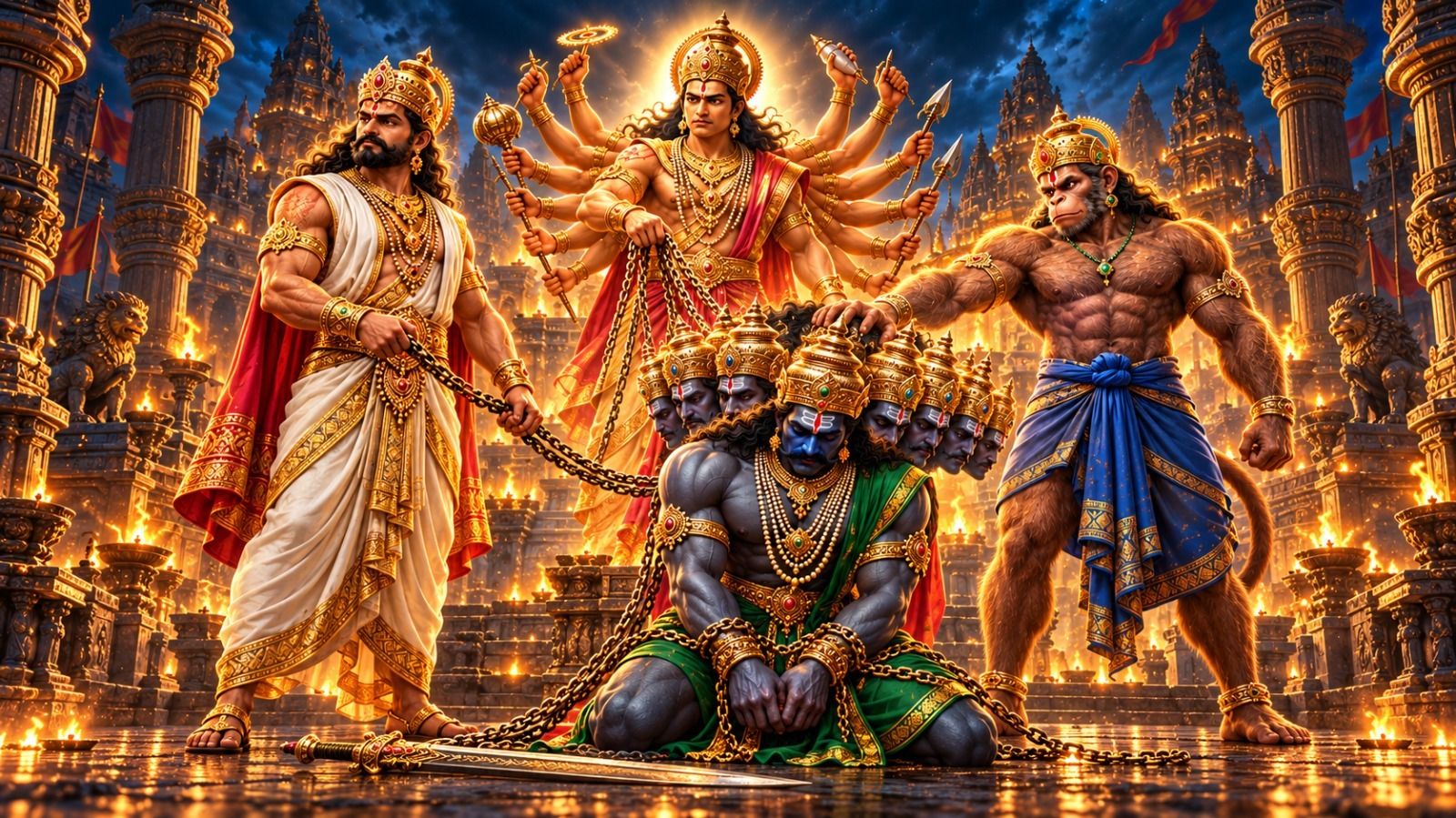
- Recognizing characters from the Ramayana or Mahabharata without knowing their stories.
- Finding few opportunities to speak or learn a family language.
- Viewing traditional arts and occupations as unrelated to modern careers.
- Wanting to explore Indian heritage but not knowing where to begin.
These experiences do not automatically mean someone has lost their cultural identity.
Culture is not fixed, and young people can express their Indian identity in different ways.
The concern is not that younger generations are becoming modern. It is whether they have meaningful opportunities to understand their heritage as they do so.
Why Are Some Young Indians Losing Touch With Their Cultural Roots?
Several social and educational changes may influence how younger generations experience Indian culture.
1. Education often places greater emphasis on marks and careers
For many Indian families, education has long represented a path toward financial independence and stability.
Parents understandably encourage academic achievement because they want their children to have secure futures.
However, when schooling and family expectations revolve almost entirely around examinations and employment, children may have less time to explore literature, traditional arts, regional history, and practical interests.
This is not a criticism of modern education.
It is a reminder that education can prepare children for employment while also helping them understand their cultural background.
2. Traditional storytelling experiences are changing
Stories shared by parents, grandparents, teachers, and other community members have helped pass cultural knowledge between generations.
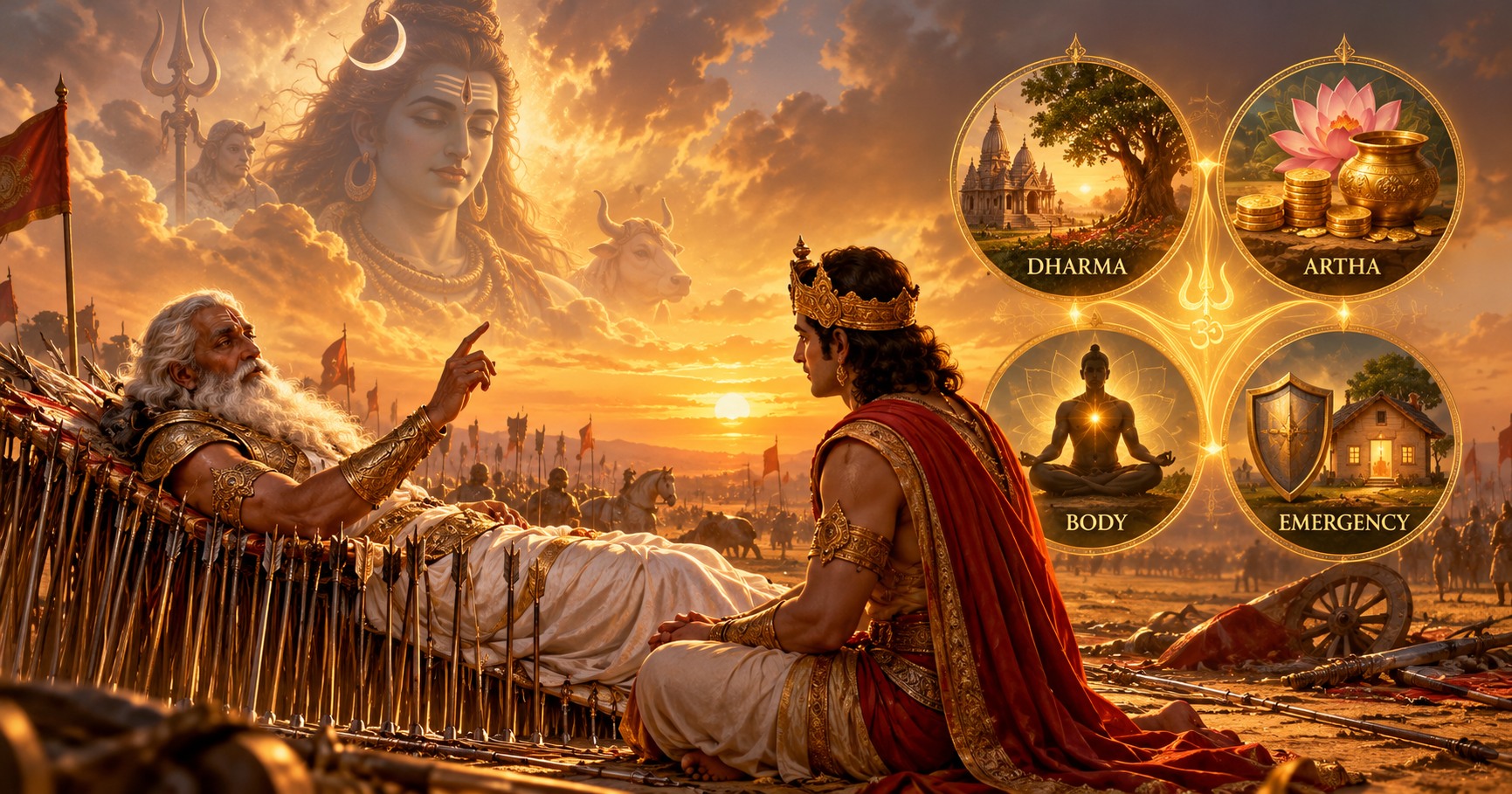
For example, a grandparent telling a Mahabharata story can introduce a child to questions about responsibility, loyalty, and difficult decisions.
When families have fewer opportunities for these conversations, children may encounter traditional stories less frequently.
Digital platforms can provide additional access to storytelling, but they need not replace personal interactions.
3. Modern lifestyles offer different cultural experiences
Young Indians can now engage with music, entertainment, education, and communities from across the world.
These experiences can enrich their lives.
At the same time, local heritage may receive less attention when it is not actively introduced through homes, schools, or community activities.
The solution is not to reject global culture. It is to make Indian cultural experiences accessible, engaging, and relevant.
4. Traditional knowledge is sometimes separated from modern skills
Indian communities have long passed on knowledge through crafts, storytelling, agriculture, performing arts, and practical work.
These forms of knowledge can remain valuable today.
For example, a young person interested in pottery can combine traditional craftsmanship with contemporary design, e-commerce, and business skills.
Understanding heritage does not have to limit career opportunities. It can expand the ways young people think about them.
How Has India's Education System Influenced Cultural Learning?
India's education system has evolved through colonial history, post-independence expansion, and continuing reforms.
During British rule, English-language education and formal academic qualifications gained institutional importance.
After independence, expanding access to schooling became an important national objective.
At the same time, influential Indian educators proposed approaches that connected academic learning with creativity and practical experience.
Mahatma Gandhi and learning through work
Mahatma Gandhi's Nai Talim placed productive work and practical learning within the educational experience.
Its underlying principle was that intellectual development and hands-on activity need not be separated.
Rabindranath Tagore and creative education
Rabindranath Tagore's educational philosophy emphasized learning through creativity, nature, and independent exploration.
His work at Santiniketan offered an alternative perspective on what education could include.
These approaches differed, but both encouraged a broader understanding of learning.
What does India's National Education Policy 2020 recommend?
India's National Education Policy 2020 recognizes the importance of practical and experiential learning.
It recommends a ten-day bagless period during Grades 6–8, allowing students to gain exposure to local vocational experts, including gardeners, potters, carpenters, and artists.
The Ministry of Education subsequently introduced guidelines in July 2024 to support this approach.
This is one example of how practical learning can be introduced alongside academic education.
Source: National Education Policy 2020, Ministry of Education and Press Information Bureau, August 2024.
Why Should Indian Children Learn About Their Cultural Heritage?
Learning about cultural heritage can help children understand their family backgrounds, languages, history, and the different perspectives that shape their communities.
It can also create opportunities to discuss values and decisions through stories and shared experiences.
Here are four ways cultural learning can contribute to a child's education.
Understanding identity and belonging
Learning family history, local traditions, and regional languages can help children explore where they come from.
Cultural identity does not require everyone to follow identical practices. It can develop through understanding, participation, and personal interpretation.
Exploring values through stories
Stories from the Ramayana and Mahabharata introduce characters who face challenging decisions involving relationships, responsibility, promises, and justice.
Rather than only asking children to remember events, parents and educators can encourage questions such as:
Why did the character make that choice? What other options were available? What can we learn from the consequences?
These conversations turn storytelling into an opportunity for reflection.
Learning about India's cultural diversity
Indian heritage includes many languages, regional traditions, artistic practices, philosophical perspectives, and literary works.
Exploring this diversity can help children understand that Indian culture is not a single uniform experience.
Connecting traditional knowledge with everyday life
Cooking, crafts, local games, family stories, music, and regional festivals can introduce children to cultural knowledge through participation.
Children can experience heritage as part of daily life rather than only as a subject in textbooks.
Can Traditional Indian Knowledge and Modern Education Work Together?
Yes. Traditional knowledge and modern education can complement each other when children have access to both academic learning and meaningful cultural experiences.
A student can study mathematics and science while learning regional literature.
A child interested in traditional music can also explore digital recording and production.
Someone curious about Indian crafts can learn modern design, pricing, and entrepreneurship.
The important distinction is between preserving valuable knowledge and idealizing every historical practice.
Traditional educational systems were not equally accessible to everyone. Modern education must preserve equal opportunity and allow students to choose their interests freely.
No child should have to sacrifice academic opportunities to pursue a craft or cultural activity.
A balanced education encourages children to develop practical skills, intellectual curiosity, creativity, and an understanding of their backgrounds.
How Can Parents Help Children Reconnect With Indian Culture?
Parents do not need expensive programs or major lifestyle changes to introduce cultural learning.
Small, consistent experiences can help make Indian heritage familiar and meaningful.
1. Encourage conversations with grandparents and elders
Invite family members to share childhood memories, local customs, and stories from their communities.
Ask children what they found interesting and what they would like to learn more about.
2. Introduce the Ramayana and Mahabharata through storytelling
Choose age-appropriate stories and explore them together.
For example, after a story from the Mahabharata, ask children to describe the characters' decisions and explain what they might have done differently.
The aim should be curiosity and discussion, not simply memorization.
3. Make space for regional languages
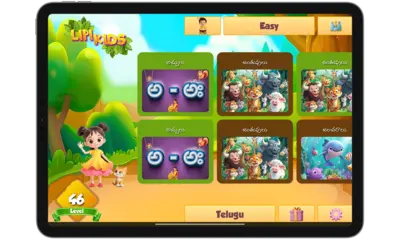
Encourage children to listen to stories, read simple books, or speak with family members in their mother tongue or another regional language.
Language can provide access to cultural experiences that are difficult to capture through translation alone.
4. Explore traditional games, arts, and crafts
Introduce local games, music, drawing, pottery, or other activities connected to regional traditions.
These experiences make cultural learning participatory.
5. Support interests beyond examination marks
Encourage children to explore creative, vocational, academic, and technical interests.
Recognize that different children develop different strengths.
6. Use technology as a cultural learning resource
Explore digital stories, interactive activities, and quizzes that introduce Indian history, literature, and epics.
Where possible, discuss what children discover and help them connect digital experiences with family and community learning.
The goal is not to force children to follow traditions. It is to give them opportunities to understand those traditions and decide how they relate to their lives.
How Can Digital Storytelling Help Young Indians Explore Their Heritage?
Digital storytelling makes stories available through formats such as mobile applications, interactive activities, games, and quizzes.
These experiences can help introduce traditional narratives to young people who are comfortable learning and exploring through digital platforms.
For example, someone encountering an unfamiliar character from the Mahabharata might begin with a short story, test their understanding through a quiz, and later explore a longer version of the narrative.
The digital experience becomes a starting point for further learning.
However, access to digital content alone does not guarantee cultural understanding.
Conversations, reading, personal interpretation, and real-world experiences remain important.
What Is Lipi Epics, and How Does It Support Cultural Learning?
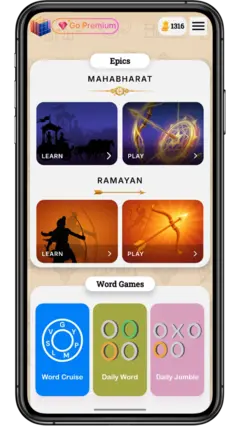
Lipi Epics is an application that introduces content from the Ramayana and Mahabharata through stories, quizzes, and games.
It aims to make India's epic storytelling heritage more accessible through interactive digital experiences.
For young people who want to explore these stories, the application offers an additional way to engage with the characters and narratives.
At Lipi, we view technology as a bridge to cultural exploration, not a replacement for books, teachers, or family storytelling.
A story discovered through an application can lead to a conversation at home. A quiz can encourage someone to explore a character or event in greater depth.
These are small but meaningful starting points.
Explore how Lipi Epics introduces the Ramayana and Mahabharata through interactive learning.
Frequently Asked Questions
Why are young Indians becoming disconnected from their cultural roots?
Some young Indians may experience cultural disconnection because of changing family lifestyles, education and career pressures, reduced opportunities for traditional storytelling, and limited exposure to regional heritage. These influences vary between families and communities, and cultural disconnection should not be assumed to affect every young person.
Is modern education responsible for the loss of Indian culture?
Modern education is not inherently responsible for cultural disconnection. However, learning environments focused narrowly on examinations and career outcomes may leave less room for cultural, creative, and practical learning. Academic education and cultural knowledge can coexist.
How can Indian culture be taught to younger generations?
Parents and educators can introduce Indian culture through family stories, regional languages, traditional games, cultural activities, literature, and age-appropriate discussions of the Ramayana and Mahabharata. Interactive digital resources can complement these experiences.
What is the importance of the Ramayana and Mahabharata for young people?
The Ramayana and Mahabharata are major works of Indian epic literature that offer opportunities to explore cultural history, storytelling traditions, character relationships, and questions about human choices. Young readers can study them thoughtfully through discussion and interpretation.
Can technology help preserve Indian cultural heritage?
Technology can make cultural material easier to access through digital books, recordings, educational videos, stories, and interactive experiences. Its usefulness depends on the quality of the material and how people engage with it.
Conclusion: Young India Can Embrace Modernity Without Losing Its Roots
Young Indians should not have to choose between professional ambition and cultural belonging.
Modern education can prepare them for emerging opportunities. Cultural learning can help them understand the stories, languages, traditions, and experiences that form part of their backgrounds.
Both deserve space.
Parents can encourage curiosity at home. Schools can introduce practical and cultural experiences alongside academic subjects. Digital platforms can offer additional ways to discover stories and ideas.
At Lipi, our contribution begins with making Indian epics accessible through interactive storytelling.
The larger responsibility belongs to all of us: to create an environment where young people can understand their heritage, explore their interests, and build their own futures.
Our children deserve both roots to understand where they come from and the freedom to decide where they want to go.
Discover the Ramayana and Mahabharata through stories, quizzes, and games with Lipi Epics.